The Scan Never Changed

Written by
Dr. Aswathi Jayaram
Written on
The Scan Never Changed
What my fellowship mentor taught me about consistency, pattern recognition, and seeing what others rarely encounter.
Every physician remembers the mentor who changed the way they practice medicine.
For me, it was Dr. James Anthony Bofill.
After residency at a small community program, I was fortunate to match into Maternal-Fetal Medicine fellowship at the University of Mississippi Medical Center. I had only six fellowship interviews, and Mississippi was the one I ranked first. I was excited to train under Dr. Bofill, whose approach to ultrasound would shape the way I practice to this day.
His influence reaches far beyond Mississippi. Anyone who trained with him, or learned from someone he trained, recognizes his approach immediately.
Every. Single. Time.
The scan never changed.
It didn't matter whether the anatomy appeared normal or something unexpected emerged. The sequence was always the same.
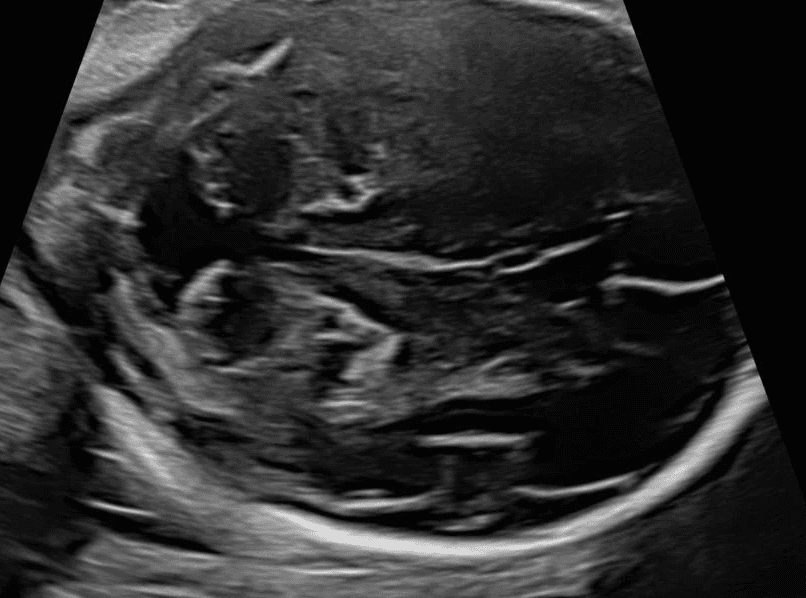
Skull and brain. Heart points to the left, stomach is on the left. Pulmonary veins, blue from above, red from below. Vessel curving away from the stomach. Cord insertion.
Then, almost every time, he'd smile and say, "Oh, hello…" as we reached the fetal sex.
Legs. Feet. Hands. Spine. Placenta. Cervix. Maternal adnexa.
The diagnosis changed. The scan never did.
At first, I believed his greatest strength was recognizing rare fetal anomalies. Years later, I realized that wasn't what made him extraordinary.
His greatest strength was consistency.
Pattern Recognition Begins with Normal
As I transitioned from fellow to educator, teaching residents, fellows, sonographers, and physicians, I finally understood what he had been teaching us all along.
He wasn't teaching a checklist.
He was teaching pattern recognition.
Every normal brain teaches you what a normal brain should look like. Every normal heart reinforces cardiac anatomy. Every normal spine strengthens your ability to recognize the subtle spine that isn't quite normal.
Pattern recognition doesn't develop from memorizing textbooks. It develops through repetition. Thousands of normal examinations become the foundation for recognizing the abnormal ones.
The more consistently you look, the more clearly you begin to see when something doesn't fit.
The Mathematics of Rare Disease
That philosophy works remarkably well—until it encounters rare disease.
Some fetal anomalies are simply too uncommon for any individual clinician to develop extensive firsthand experience.
Agenesis of the corpus callosum, heterotaxy syndrome, amniotic band syndrome, and numerous genetic syndromes may only be encountered a handful of times during an entire career. A community sonographer performing hundreds of anatomy scans each year might see a particular rare condition only once every several years. Even during Maternal-Fetal Medicine fellowship, exposure to the rarest conditions is limited.
This isn't a failure of training. It isn't a limitation of the sonographer or physician.
It's the mathematics of rarity.
No amount of dedication can create repetition where repetition doesn't exist.
Why Rare Diagnoses Are Difficult
Rare anomalies are not only uncommon. They can also be subtle.
Some present through indirect findings. Others require specialized imaging planes beyond a routine anatomy survey. Some evolve over time and may not become apparent until later in pregnancy.
Looking back after a diagnosis is made, the findings can seem obvious.
Looking forward, during a real-time examination with limited information, they rarely are.
That distinction matters.
Medicine sometimes asks clinicians to recognize patterns they have seen only once—or perhaps never.
Extending Experience
Academic and tertiary centers benefit from something that is difficult to reproduce elsewhere: concentrated exposure.
They see more referrals. More complex cases. More rare abnormalities.
More cases create more repetition. More repetition strengthens pattern recognition.
But most pregnant patients begin their care outside tertiary referral centers. The expertise developed through years of concentrated exposure cannot physically be present in every practice performing prenatal ultrasound.
That raises a question that stayed with me long after fellowship:
How do we make subspecialty expertise available wherever it’s needed—not just where experts happen to be?
For years, it was simply a question.
Eventually, it became something we could begin to build.
Why We Built Fetal Review
That question became one of the foundations of Fetal Review.
Not because we believe artificial intelligence replaces physicians. Clinical judgment, experience, and thoughtful decision-making remain central to prenatal diagnosis.
But technology gives us an opportunity to extend something that has historically been difficult to scale: consistent review informed by accumulated experience.
AI can provide another structured layer of analysis. It can help clinicians evaluate anatomy consistently and surface imaging patterns that deserve another look—particularly when those patterns represent findings an individual clinician may encounter only a handful of times in a career.
In many ways, the principle is the same one Dr. Bofill taught us without ever mentioning technology.
Every scan followed the same sequence, regardless of what it found, because consistency is what makes deviations from normal easier to recognize.
Fetal Review grew from that same idea: use technology to support a consistent second review and help bring more accumulated experience into the everyday fetal imaging workflow.
Our goal isn't to replace expertise. It's to help distribute it.
A Lesson That Never Left Me
When I think back to fellowship, I don't remember individual anomalies as much as I remember a philosophy.
The diagnosis changed. The scan never did.
Years later, that lesson continues to shape how I teach, how I practice, and how we think about the future of prenatal diagnosis.
Technology will continue to change. Our ability to analyze images will improve. The tools available to physicians and sonographers will become more capable.
But the principle Dr. Bofill taught remains remarkably simple:
Look carefully. Look consistently. Learn normal so well that abnormal has somewhere to stand out.
Some of the most important advances in medicine don't replace experience.
They help make experience more accessible.
That is the future we're working toward at Fetal Review.
Dr. Aswathi Jayaram is a Maternal-Fetal Medicine specialist and Co-Founder, Co-CEO of Fetal Review, an AI-assisted fetal ultrasound review platform focused on extending specialist-level support across community and academic care settings.
Stay informed
Get updates on our latest research and clinical insights.
We respect your privacy. Unsubscribe at any time.


